intermediate

intermediate (ລະດັບປານກາງ) – ເໝາະກັບກຸ່ມ Real ທີ່ເລີ່ມມີສຳນວນ ແລະ ການຜູກປະໂຫຍກທີ່ຍາວຂຶ້ນ.

ເວົ້າກ່ຽວກັບ goals
> REAL

REAL ENGLISH 19: Talking about goals

1. Pattern Discovery When English speakers talk about goals, they often use these patterns: (ເມື່ອເຈົ້າຂອງພາສາອັງກິດເວົ້າເຖິງເປົ້າໝາຍ, ພວກເຂົາມັກຈະໃຊ້ຮູບແບບເຫຼົ່ານີ້): 🔷 Pattern A — I want to… I want to improve my English. I want to get a better job. 🔷 Pattern B — I’m going to… I’m going to study every day. I’m going to save money. 🔷 […]

explain problem clearly
> REAL

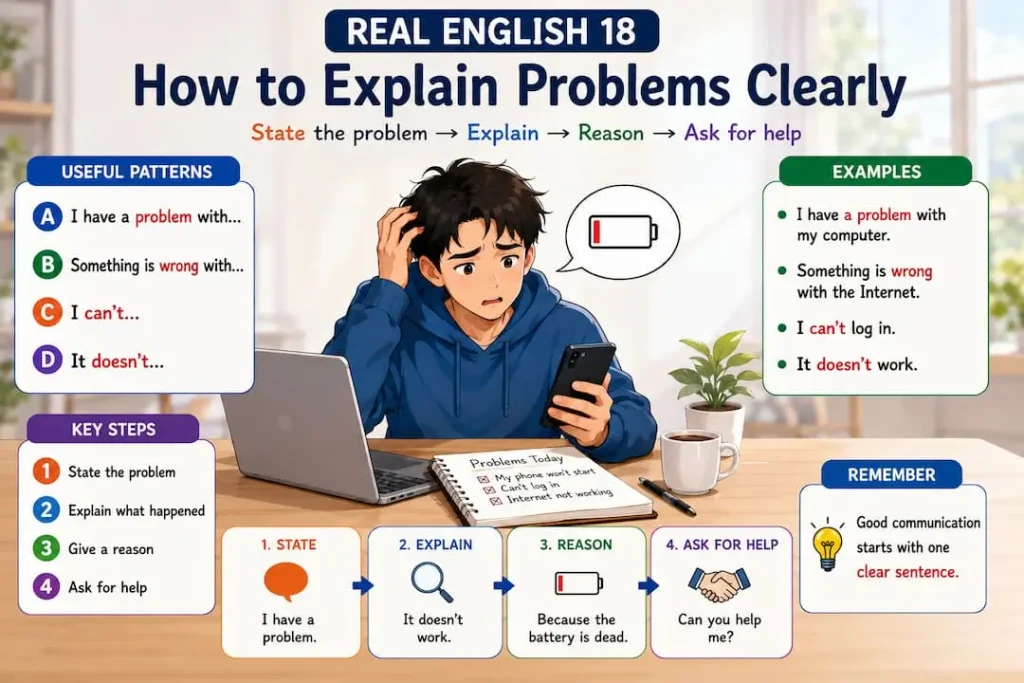
Real English 18: How to Explain Problems Clearly

1. Pattern Discovery When English speakers explain problems, they often use these patterns: (ເມື່ອເຈົ້າຂອງພາສາອັງກິດອະທິບາຍບັນຫາ, ພວກເຂົາມັກຈະໃຊ້ຮູບແບບເຫຼົ່ານີ້): 🔷 Pattern A — I have a problem with… I have a problem with my phone. I have a problem with my computer. 🔷 Pattern B — Something is wrong with… Something is wrong with my car. Something is wrong

I like
> REAL

Real English 17: The Language of Interests and Hobbies

1. Pattern Discovery When English speakers talk about hobbies, they often use these patterns: (ເມື່ອເຈົ້າຂອງພາສາອັງກິດເວົ້າເຖິງວຽກໃນເວລາວ່າງ, ພວກເຂົາມັກຈະໃຊ້ຮູບແບບເຫຼົ່ານີ້): 🔷 Pattern A — I like… (ຂ້ອຍມັກ…) I like reading. I like football. 🔷 Pattern B — I’m interested in… (ຂ້ອຍສົນໃຈ…) I’m interested in technology. I’m interested in history. 🔷 Pattern C — I enjoy… (ຂ້ອຍເພີດເພີນກັບ…) I enjoy cooking.

ວຽກ ແລະ ການສຶກສາ
> REAL

Real English 16: How to Talk About Work and Study Naturally

1. Pattern Discovery When English speakers talk about work or study, they often use these patterns: (ເມື່ອເຈົ້າຂອງພາສາອັງກິດເວົ້າເຖິງວຽກງານ ຫຼື ການຮຽນ, ພວກເຂົາມັກຈະໃຊ້ຮູບແບບເຫຼົ່ານີ້): 🔷 Pattern A: I work as + job (ຂ້ອຍເຮັດວຽກເປັນ…) Examples: I work as a teacher. (ຂ້ອຍເປັນຄູ) I work as an engineer. (ຂ້ອຍເປັນວິສະວະກອນ) I work as a police officer. (ຂ້ອຍເປັນຕຳຫຼວດ) 🔷 Pattern B: I study +

present perfect
> REAL

Real English 15: Talking About Your Experiences

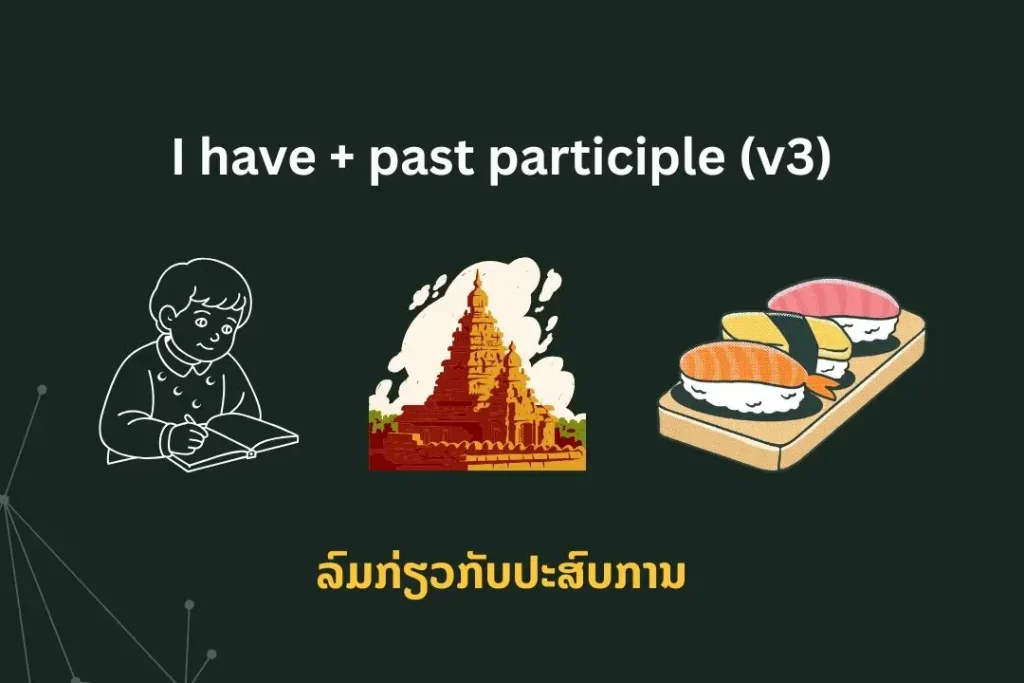
1. Pattern Discovery  When English speakers talk about experiences, they often use these patterns: (ເມື່ອເຈົ້າຂອງພາສາອັງກິດເວົ້າເຖິງປະສົບການໃນຊີວິດ, ພວກເຂົາມັກຈະໃຊ້ຮູບແບບເຫຼົ່ານີ້): 🔷 Pattern A: I have + past participle (V3) (ຂ້ອຍເຄີຍ…) Examples: I have visited Thailand. (ຂ້ອຍເຄີຍໄປຢ້ຽມຢາມປະເທດໄທ) I have tried sushi. (ຂ້ອຍເຄີຍລອງກິນຊູຊິ) I have read that book. (ຂ້ອຍເຄີຍອ່ານປຶ້ມຫົວອັນນັ້ນແລ້ວ) 🔷 Pattern B: I have never + past participle (V3) (ຂ້ອຍບໍ່ເຄີຍ…) Examples:

I am going to
> REAL

Real English 14: Talking About Future Plans

1. Pattern Discovery When English speakers talk about future plans, they often use these patterns: (ເມື່ອເຈົ້າຂອງພາສາອັງກິດເວົ້າເຖິງແຜນການໃນອະນາຄົດ, ພວກເຂົາມັກຈະໃຊ້ຮູບແບບເຫຼົ່ານີ້): 🔷 Pattern A: I am going to + verb (ຂ້ອຍຈະ / ຂ້ອຍກຳລັງຈະ…) Examples: I am going to study English. (ຂ້ອຍຈະຮຽນພາສາອັງກິດ) I am going to travel next year. (ຂ້ອຍຈະໄປທ່ຽວປີໜ້າ) I am going to call my friend. (ຂ້ອຍຈະໂທຫາໝູ່ຂອງຂ້ອຍ) 🔷 Pattern

ວຽກປະຈຳວັນ
> REAL

Real English 13: Talking About Daily Life

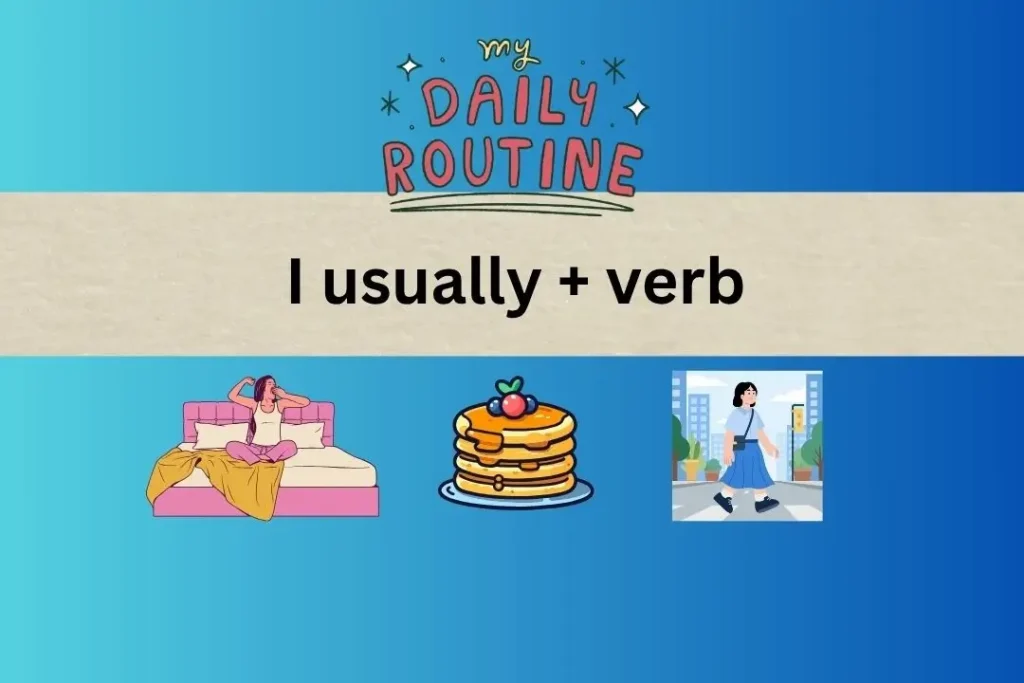
1. Pattern Discovery  When people talk about daily life, they usually talk about routines. (ເມື່ອຄົນເຮົາເວົ້າເຖິງຊີວິດປະຈຳວັນ ພວກເຂົາມັກຈະເວົ້າເຖິງສິ່ງທີ່ເຮັດເປັນປະຈຳ). 🔷 Pattern A: I usually + verb (ຂ້ອຍມັກຈະ…) Examples: I usually wake up early. (ຂ້ອຍມັກຈະຕື່ນແຕ່ເຊົ້າ) I usually drink coffee. (ຂ້ອຍມັກຈະດື່ມກາເຟ) I usually study at night. (ຂ້ອຍມັກຈະຮຽນຕອນກາງຄືນ) 🔷 Pattern B: I always + verb (ຂ້ອຍເຮັດ…ສະເໝີ) Examples: I always brush my

Scroll to Top