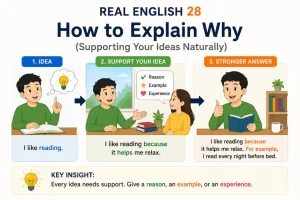
1. Pattern Discovery
Native speakers rarely stop after expressing an idea. They naturally support it with a reason, an example, or a personal experience.
Pattern A — Idea + Reason
- I study English because I want more opportunities.
- I walk to work because it’s good exercise.
Pattern B — Idea + Example
- Learning English is useful.
- For example, I can communicate with people from different countries.
Pattern C — Idea + Experience
- I enjoy reading English books.
- Last year, I finished my first English novel.
Pattern D — Idea + Reason + Example
- I like online learning because it’s flexible.
- For example, I can study whenever I have free time.
⭐ Pattern Insight
Good communication doesn’t stop after one sentence.
Native speakers usually continue by supporting their ideas.
2. Pattern Fuel
Connectors
because — ເພາະວ່າ
for example — ຕົວຢ່າງ
for instance — ຕົວຢ່າງ
that’s why — ນັ້ນຄືເຫດຜົນທີ່…
in fact — ຄວາມຈິງແລ້ວ
Useful Expressions
I want to improve. — ຂ້ອຍຢາກພັດທະນາ
it’s useful. — ມັນເປັນປະໂຫຍດ
it’s convenient. — ມັນສະດວກ
it’s interesting. — ມັນໜ້າສົນໃຈ
I learned a lot. — ຂ້ອຍຮຽນຮູ້ຫຼາຍ
I had a good experience. — ຂ້ອຍມີປະສົບການທີ່ດີ
it helps me every day. — ມັນຊ່ວຍຂ້ອຍທຸກມື້
3. Pattern Build
Step 1 — Complete
I like __________ because __________.
I enjoy __________. For example, __________.
I think __________ because __________.
I chose __________ because __________.
Step 2 — Make your own sentences
Write five true sentences.
1 …………………………………………………………………..
2 …………………………………………………………………..
3 …………………………………………………………………..
4 ………………………………………………………………….
5 ………………………………………………………………….
4. Pattern Expansion
Level 1
I study English.
↓
Level 2
I study English because it’s useful.
↓
Level 3
I study English because it’s useful for my career.
↓
Level 4
I study English because it’s useful for my career. For example, I can communicate with international clients.
📌 Now you try
I enjoy __________________.
↓
I enjoy __________________ because __________________.
↓
I enjoy __________________ because __________________.
For example, __________________.
5. Pattern Evolution
Idea
↓
Idea + Reason
↓
Idea + Reason + Example
↓
Idea + Reason + Example + Experience
Example
I like traveling.
↓
I like traveling because I learn new things.
↓
For example, I met many friendly people in Thailand.
↓
That experience made me more confident.
⭐ Key Insight
Native speakers make their ideas stronger by adding support—not by making sentences more complicated.
6. Natural English
Native speakers often shorten:
because → ’cause
They also naturally add:
For example…
Actually…
In fact…
These small expressions make conversations smoother and easier to follow.
7. Real Conversation
Situation 1
A: Why do you enjoy learning English?
B: Because it helps me communicate with more people. For example, I can talk with foreign visitors in my city.
Situation 2
A: Why did you choose this restaurant?
B: Because the food is delicious. In fact, I’ve been here many times.
(Read both conversations aloud three times.)
8. Speaking Challenge
🎤 Speak for one minute.
Choose one topic:
- your favorite hobby
- your job
- learning English
- your hometown
Don’t stop after one sentence. Give:
- your idea
- your reason
- one example
- one personal experience
9. Pattern Reflection
Before moving to Lesson 29, ask yourself:
☐ Can I explain my ideas clearly?
☐ Can I give a reason naturally?
☐ Can I support my ideas with an example?
☐ Can I make my answers longer without translating?
🌱 Key Lesson Insight
Strong English is not about speaking more words. It is about making your ideas clear and convincing. Native speakers naturally support what they say with reasons, examples, or personal experiences. This habit makes conversations more meaningful and prepares you for explaining cause and effect in the next lesson.
*(ການເວົ້າພາສາອັງກິດໃຫ້ດີ ບໍ່ແມ່ນການເວົ້າໃຫ້ຍາວ ແຕ່ແມ່ນການເຮັດໃຫ້ແນວຄິດຂອງເຈົ້າຊັດເຈນ ແລະ ໜ້າເຊື່ອຖື ໂດຍໃຊ້ເຫດຜົນ, ຕົວຢ່າງ ແລະ ປະສົບການສະໜັບສະໜູນ.)
Further reading