Author name: LaoGuru

ຍົກຕົວຢ່າງ
> REAL

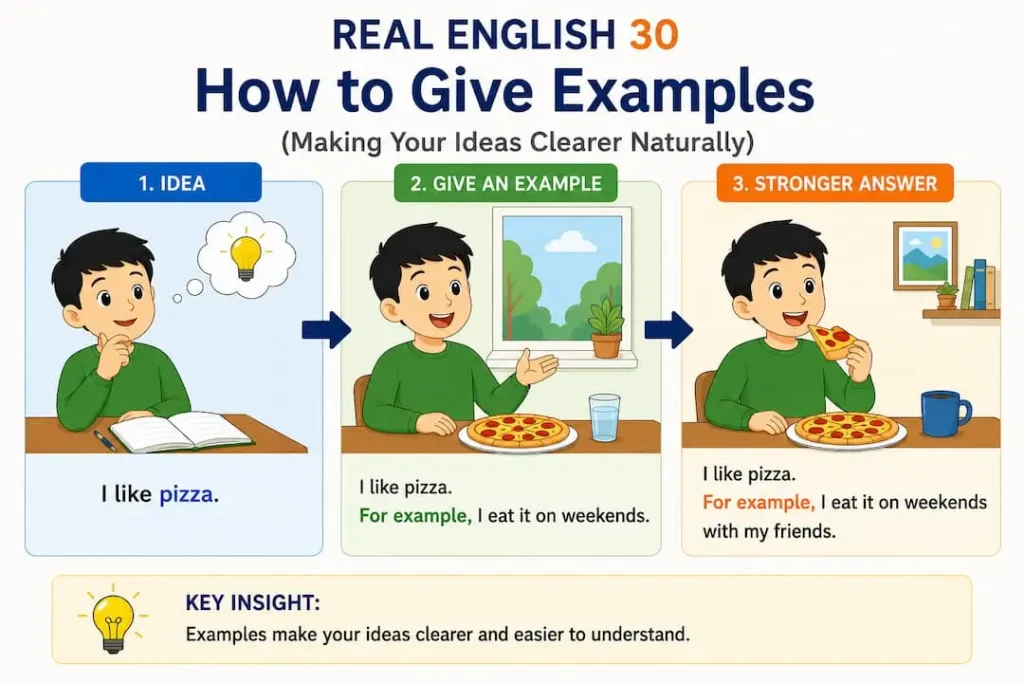
Real English 30: How to Give Examples

1. Introduction Compare these two answers.      ❌ English is important.      ✅ English is important. For example, it helps people communicate around the world. Which one sounds more natural? Native speakers usually support their ideas with examples. 2. Pattern Discovery Pattern 1 Idea English is useful. ↓ Add an example English is […]

ສາເຫດ ແລະ ຜົນ
> REAL

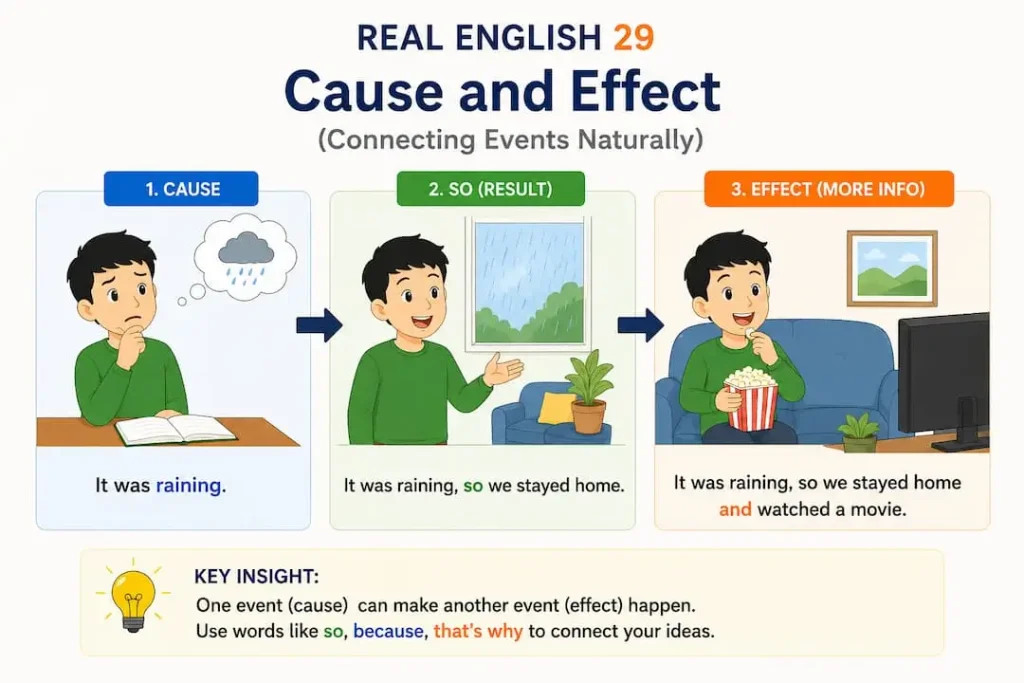
Real English 29: Cause and Effect

1. Introduction In Lesson 28, you learned how to explain why something happens by giving a reason. In this lesson, you’ll go one step further. Instead of simply answering “Why?”, you’ll learn how native speakers connect one event to another. This is called cause and effect, and it’s one of the most common thinking patterns

ການອະທິບາຍເຫດຜົນ
> REAL

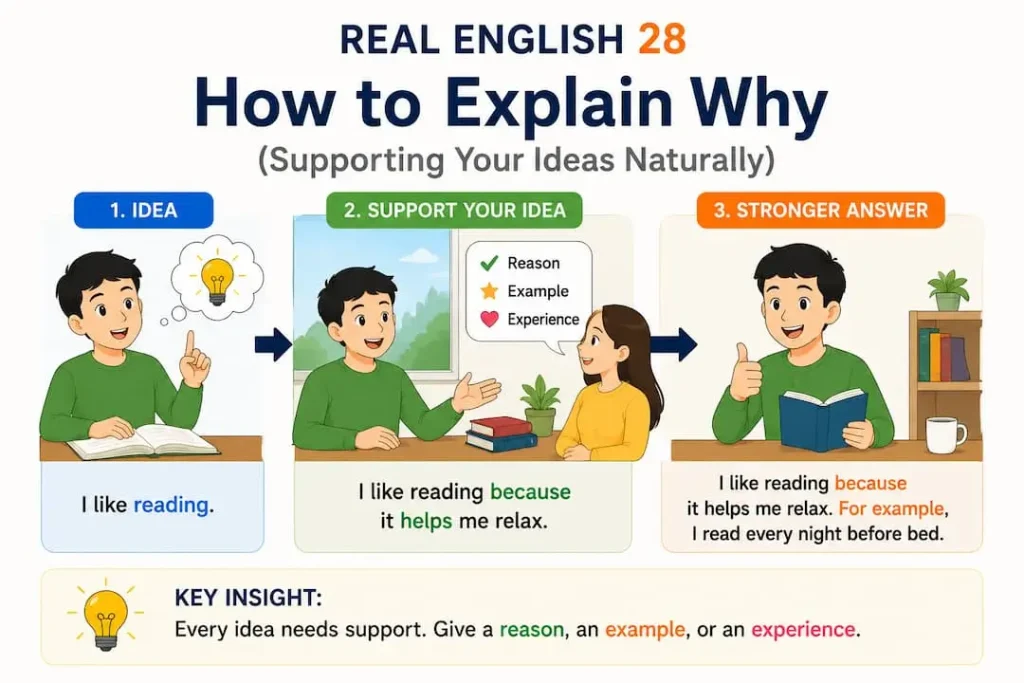
Real English 28: How to Explain Why

1. Pattern Discovery Native speakers rarely stop after expressing an idea. They naturally support it with a reason, an example, or a personal experience. Pattern A — Idea + Reason I study English because I want more opportunities. I walk to work because it’s good exercise. Pattern B — Idea + Example Learning English is

ການສົມທຽບ comparing
> REAL

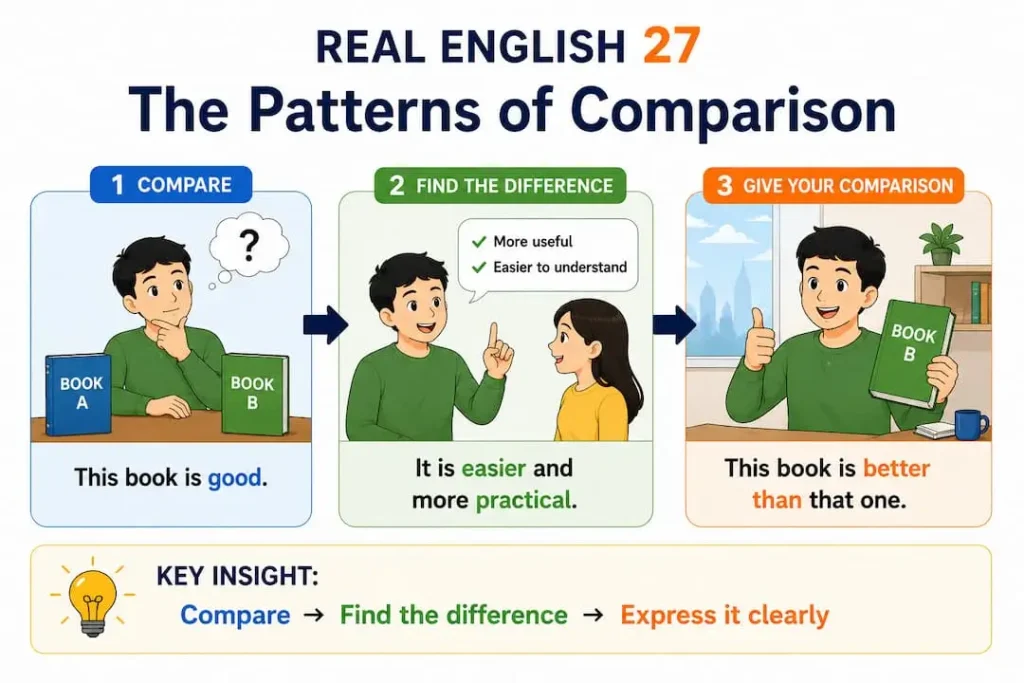
Real English 27: The Patterns of Comparison

1. Pattern Discovery English speakers compare things every day. Instead of only describing something, they often compare it with another thing. Pattern A (A is + adjective + than + B) English is easier than before. This book is better than that one. Pattern B (more + adjective + than) This lesson is more interesting

Connecting Ideas Naturally ເຊື່ອມຄວາມຄິດເຂົ້າກັນ
> REAL

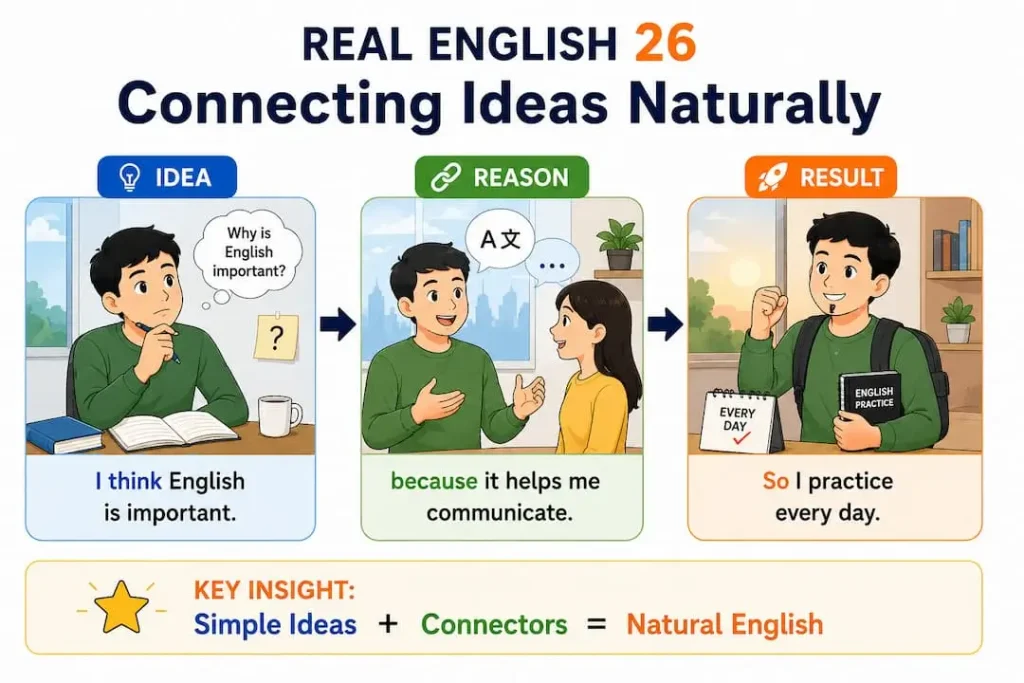
Real English 26: Connecting Ideas Naturally

1. Pattern Discovery When English speakers share their thoughts (ຄວາມຄິດເຫັນ), they do not usually speak one short sentence at a time. They connect ideas together: Idea → Reason → Result → Example Instead of: ❌ I like English.❌ English is important.❌ I study every day. Native speakers naturally connect: ✅ I like English because it

ເວົ້າປະສົບການພາສາອັງກິດ
> REAL

Real English 25: Talking About Experiences

1. Pattern Discovery ຄົນອັງກິດໃຊ້ Pattern ເຫຼົ່ານີ້ເວລາເລົ່າປະສົບການ: Pattern A: I have been… I have been to Thailand. I have been to many places. Pattern B: I have + past participle I have learned English. I have tried local food. Pattern C: I have never… I have never traveled alone. I have never tried skiing. ⭐ Pattern

Real English 24 connecting past present and future English patterns
> REAL

Real English 24: Connecting Past, Present & Future

1. Pattern Discovery When English speakers tell a story, they connect different times. Pattern A — Past → Present I studied English last year, and now I use it at work. (ຂ້ອຍຮຽນອັງກິດປີກາຍ ແລະ ຕອນນີ້ຂ້ອຍໃຊ້ມັນໃນວຽກ.) Pattern B — Present → Future I practice English every day, and I will use it in my future career. Pattern

Scroll to Top