1. Pattern Discovery
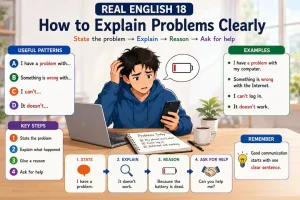
When English speakers explain problems, they often use these patterns: (ເມື່ອເຈົ້າຂອງພາສາອັງກິດອະທິບາຍບັນຫາ, ພວກເຂົາມັກຈະໃຊ້ຮູບແບບເຫຼົ່ານີ້):
🔷 Pattern A — I have a problem with…
-
I have a problem with my phone.
-
I have a problem with my computer.
🔷 Pattern B — Something is wrong with…
-
Something is wrong with my car.
-
Something is wrong with the Internet.
🔷 Pattern C — I can’t…
-
I can’t log in.
-
I can’t find my keys.
🔷 Pattern D — It doesn’t…
-
It doesn’t work.
-
It doesn’t open.
⭐ Pattern Insight
Don’t explain everything first. Start with the problem, then add details.
(ຢ່າຟ້າວອະທິບາຍທຸກຢ່າງໃນຕອນທຳອິດ. ໃຫ້ເລີ່ມຕົ້ນດ້ວຍການບອກບັນຫາກ່ອນ, ແລ້ວຈຶ່ງເພີ່ມລາຍລະອຽດຕາມຫຼັງ).
2. Pattern Fuel
ໃຊ້ຄຳສັບເຫຼົ່ານີ້ປະກອບເຂົ້າກັບ Pattern.
📌 Common Problems
-
phone (ໂຟນ) = ໂທລະສັບ
-
computer (ຄອມ-ພິວ-ເຕີ) = ຄອມພິວເຕີ
-
Internet (ອິນ-ເຕີ-ເນັດ) = ອິນເຕີເນັດ
-
password (ພາສ-ເວີດ) = ລະຫັດຜ່ານ
-
key (ຄີ) = ລູກກະແຈ
-
wallet (ວໍ-ເລັດ) = ກະເປົາເງິນ
-
car (ຄາ) = ລົດ
-
printer (ພຣິນ-ເຕີ) = ເຄື່ອງພິມ
-
battery (ແບັດ-ເຕີ-ຣີ) = ແບັດເຕີຣີ
-
email (ອີ-ເມວ) = ອີເມວ
📌 Useful Verbs
-
work (ເວີກ) = ເຮັດວຽກ / ໃຊ້ການໄດ້
-
open (ໂອ-ເພັນ) = ເປີດ
-
start (ສະ-ຕາດ) = ເລີ່ມຕົ້ນ
-
find (ຟາຍດ໌) = ຊອກຫາ
-
remember (ຣີ-ເມັມ-ເບີ) = ຈື່
-
log in (ລັອກ-ອິນ) = ເຂົ້າສູ່ລະບົບ
-
connect (ຄອນ-ເນັກ) = ເຊື່ອມຕໍ່
-
charge (ຊາດ) = ສາກໄຟ
-
lose (ລູດສ) = ເຮັດຫາຍ
-
fix (ຟິກສ໌) = ສ້ອມແປງ
3. Pattern Build
✍️ Step 1 — Complete the patterns
-
I have a problem with __________________.
-
I have a problem with __________________.
-
Something is wrong with __________________.
-
Something is wrong with __________________.
-
I can’t __________________.
-
I can’t __________________.
-
It doesn’t __________________.
-
It doesn’t __________________.
✍️ Step 2 — Make your own sentences
Write five real problems you may have.
1) ……………………………………………………….
2) ……………………………………………………….
3) ……………………………………………………….
4) ……………………………………………………….
5) ……………………………………………………….
4. Pattern Expansion
Level 1: My phone doesn’t work.
Level 2: My phone doesn’t work today.
Level 3: My phone doesn’t work because the battery is dead.
Level 4: My phone doesn’t work, so I can’t call anyone.
📌 Now you try:
I can’t log in.
↓ I can’t log in because ____________________.
↓ I can’t log in because ____________________, so ____________________.
5. Pattern Evolution
-
Basic: I have a problem.
-
Add Detail: I have a problem with my computer.
-
Add Reason: I have a problem with my computer because it won’t start.
-
Combine Patterns: I have a problem with my computer. It won’t start, so I can’t finish my work.
⭐ Key Insight:
Good communication starts with one clear sentence. (ການສື່ສານທີ່ດີ ເລີ່ມຕົ້ນດ້ວຍປະໂຫຍກທີ່ຊັດເຈນພຽງປະໂຫຍກດຽວ).
6. Pattern Family
Different patterns express problems differently.
-
Basic: I have a problem.
-
Specific: I have a problem with my laptop.
-
Result: I can’t finish my work.
-
Natural: Something is wrong with my laptop.
7. Natural English
Native speakers often say:
-
“It won’t work.” (ແທນທີ່ຈະເວົ້າວ່າ It will not work)
-
“I can’t log in.” (ບໍ່ນິຍົມເວົ້າ I cannot log in. ເພາະເປັນທາງການເກີນໄປ)
🎧 Pronunciation Tip:
-
“won’t” ອອກສຽງວ່າ (ໂວນທ໌) ບໍ່ແມ່ນ “will not”.
-
ຟັງສຽງ “can’t” ໃຫ້ດີ ເພາະໃນການສົນທະນາປົກກະຕິຈະອອກສຽງໄວ.
8. Real Conversation
Situation 1 — Asking for Help
-
A: What’s wrong? (ເກີດຫຍັງຂຶ້ນ?)
-
B: I have a problem with my phone. It won’t turn on, so I can’t call anyone. (ໃຊ້ການຮວມ Pattern)
Situation 2 — At Work
-
A: Why are you late? (ເປັນຫຍັງເຈົ້າຈຶ່ງມາສວາຍ?)
-
B: Something is wrong with my car because the engine won’t start, so I’m waiting for someone to fix it. (ໃຊ້ການຮວມ Pattern)
(Read both conversations aloud three times).
9. Speaking Challenge
Talk about a real problem you have had for one minute. (ເວົ້າກ່ຽວກັບບັນຫາທີ່ເຈົ້າເຄີຍພົບມາໃຫ້ໄດ້ 1 ນາທີ).
Talk about:
-
What the problem is
-
What happened
-
Why it is a problem
-
What you need to do to fix it
Rules:
❌ Do not write.
❌ Do not translate.
✅ Just speak.
10. Pattern Reflection
Before moving to Lesson 19, ask yourself:
[ ] Can I explain a simple problem?
[ ] Can I ask for help?
[ ] Can I describe what is wrong?
[ ] Can I give a reason?
[ ] Can I combine two or more patterns?
🌱 Key Lesson Insight
Confident English speakers do not use difficult words to explain problems. They use simple patterns in a clear order: state the problem → explain what happened → give a reason → ask for help if needed. Master this sequence, and people will understand you quickly.
(ຜູ້ທີ່ເວົ້າພາສາອັງກິດໄດ້ຢ່າງໝັ້ນໃຈ ບໍ່ໄດ້ໃຊ້ຄຳສັບຍາກໆເພື່ອອະທິບາຍບັນຫາ. ພວກເຂົາໃຊ້ຮູບແບບປະໂຫຍກງ່າຍໆຕາມລຳດັບ: ບອກບັນຫາ → ອະທິບາຍສິ່ງທີ່ເກີດຂຶ້ນ → ໃຫ້ເຫດຜົນ → ຂໍຄວາມຊ່ວຍເຫຼືອຖ້າຈຳເປັນ).
ແນະນຳອ່ານ:
📖 Real English 19: How to talk about goals like a native speaker
📖 Real English 17: The Language of Interests and Hobbies
📢 Share: ຖ້າບົດຄວາມນີ້ມີປະໂຫຍດ, ຢ່າລືມ ກົດແຊຣ໌ (Share) ບົດຄວາມນີ້ອອກໄປ ເພື່ອແບ່ງປັນຄວາມຮູ້ດີໆ ໃຫ້ກັບໝູ່ເພື່ອນ ແລະ ເປັນກຳລັງໃຈໃຫ້ກັບທີມງານ Lao Guru ເດີ້!