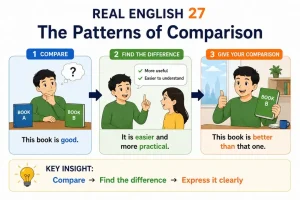
1. Pattern Discovery
- English speakers compare things every day.
- Instead of only describing something, they often compare it with another thing.
Pattern A (A is + adjective + than + B)
- English is easier than before.
- This book is better than that one.
Pattern B (more + adjective + than)
- This lesson is more interesting than the last one.
- My job is more challenging than before.
Pattern C (less + adjective + than)
- This exercise is less difficult than yesterday’s.
- Traveling by train is less expensive than flying.
Pattern D (the same as)
- My opinion is the same as yours.
- This phone works the same as my old one.
⭐ Pattern Insight
Comparison helps people explain differences and similarities more clearly.
(ການປຽບທຽບຊ່ວຍໃຫ້ເຮົາອະທິບາຍຄວາມແຕກຕ່າງ ແລະ ຄວາມຄ້າຍຄືໄດ້ຢ່າງຊັດເຈນ.)
2. Pattern Fuel
Comparison Words (ຄຳສັບສຳລັບການປຽບທຽບ)
better — ດີກວ່າ
easier — ງ່າຍກວ່າ
faster — ໄວກວ່າ
slower — ຊ້າກວ່າ
more interesting — ໜ້າສົນໃຈກວ່າ
more useful — ມີປະໂຫຍດກວ່າ
less expensive — ລາຄາຖືກກວ່າ
the same as — ຄືກັນກັບ
than — ກວ່າ
before — ກ່ອນ
3. Pattern Build
Step 1 — Complete
English is ______ than ______.
This book is ______ than ______.
My life is more ______ than ______.
My idea is the same as ______.
Step 2 — Make your own sentences
Write five comparison sentences.
1 …………………………………………………………………..
2 …………………………………………………………………..
3 …………………………………………………………………..
4 ………………………………………………………………….
5 ………………………………………………………………….
4. Pattern Expansion
Level 1
English is useful.
↓
Level 2
English is more useful than I thought.
↓
Level 3
English is more useful than I thought because I use it every day.
↓
Level 4
English is more useful than I thought because I use it every day at work.
Now you try
My English is __________.
↓
My English is __________ than __________.
↓
My English is __________ than __________ because __________.
5. Pattern Evolution
Simple Description
English is useful.
↓
Comparison
English is more useful than before.
↓
Reason
English is more useful than before because I use it every day.
↓
Real English
English is much more useful than before because it helps me communicate with people from different countries.
⭐ Key Insight
Comparison is not only about grammar.
It is a way to explain your ideas more clearly.
6. Natural English
Native speakers often use simple comparisons.
It’s better.
Much better.
A little easier.
Far more interesting.
These short patterns sound natural in daily conversations.
7. Real Conversation
Situation 1 — Learning English
A: Is English easier now?
B: Yes. It’s much easier than last year because I practice every day.
Situation 2 — Choosing Books
A: Which book do you prefer?
B: I like this one. It’s more practical than the other one.
(Read both conversations aloud three times.)
(ອ່ານບົດສົນທະນາອອກສຽງດັງໆ 3 ຮອບ)
8. Speaking Challenge
🎤 Speak for one minute.
Compare:
- your English now and one year ago
- two cities
- two jobs
- two hobbies
- two ways of learning English
Try to use:
- better than
- easier than
- more…
- less…
- the same as
9. Pattern Reflection
Before moving to Lesson 28, ask yourself:
☐ Can I compare two things naturally?
☐ Can I use better than correctly?
☐ Can I use more… than?
☐ Can I use the same as?
☐ Am I comparing ideas instead of translating word by word?
🌱 Key Lesson Insight
Native speakers compare things all the time. Instead of saying only what something is, they explain how it is different or similar. Once you master comparison patterns, your English becomes more natural, more descriptive, and much more engaging.
(ເຈົ້າຂຽນພາສາອັງກິດໄດ້ດີເມື່ອເຈົ້າສາມາດປຽບທຽບສິ່ງຕ່າງໆ ໄດ້ຢ່າງເປັນທຳມະຊາດ ບໍ່ແມ່ນພຽງແຕ່ບອກຂໍ້ເທັດຈິງ.)
Further reading
📢 ລອງຂຽນປະໂຫຍກປຽບທຽບ 3 ປະໂຫຍກໃນຄອມເມັ້ນ ໂດຍໃຊ້ better than, more…than ຫຼື the same as. ທີມງານ Lao Guru ຈະຊ່ວຍກວດ ແລະ ແນະນຳໃຫ້.