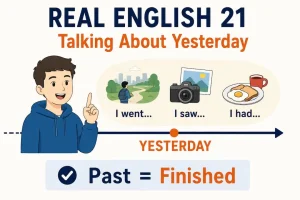
1. Pattern Discovery
When English speakers talk about yesterday, they usually change the verb (ປ່ຽນຄຳກຳມະໃຫ້ເປັນຮູບອະດີດ).
Pattern A (I + past verb)
- I worked yesterday.
- I studied English last night.
Pattern B (I went…)
- I went to school.
- I went home early.
Pattern C (I had…)
- I had breakfast at 7.
- I had a meeting yesterday.
Pattern D (Yesterday, I…)
- Yesterday, I stayed home.
- Yesterday, I visited my friend.
⭐ Pattern Insight:
English does not usually add a word to show the past. Instead, the verb changes. (ພາສາອັງກິດບໍ່ໄດ້ເພີ່ມຄຳສັບເພື່ອບອກອະດີດ, ແຕ່ໃຫ້ປ່ຽນຕົວ Verb ແທນ).
Present → Past
- work → worked
- study → studied
- visit → visited
- go → went
- have → had
2. Pattern Fuel
Time Expressions
-
yesterday – ມື້ວານ
-
last night – ຄືນກາຍ
-
last week – ອາທິດກາຍ
-
this morning – ເຊົ້ານີ້
-
after work – ຫຼັງເລີກວຽກ
-
before dinner – ກ່ອນອາຫານແລງ
Activities (ກິດຈະກຳໃນຮູບອະດີດ)
-
worked – ເຮັດວຽກ
-
studied – ຮຽນ
-
visited – ໄປຢາມ
-
watched TV – ເບິ່ງໂທລະທັດ
-
cooked dinner – ແຕ່ງກິນ
-
played football – ເຕະບານ
-
called my friend – ໂທຫາໝູ່
-
went shopping – ໄປຊື້ເຄື່ອງ
-
read a book – ອ່ານປຶ້ມ
-
finished my work – ເຮັດວຽກສຳເລັດ
3. Pattern Build
✍ Step 1 — Complete
- Yesterday I __________.
- I __________ last night.
- I went to __________.
- I had __________.
✍ Step 2 — Make your own sentences
Write five true sentences about yesterday.
1)……………………………………………………….
2)………………………………………………………
3)……………………………………………………..
4)……………………………………………………..
5)…………………………………………………….
4. Pattern Expansion
Level 1: I studied.
↓
Level 2: I studied English.
↓
Level 3: I studied English last night.
↓
Level 4: I studied English last night because I have an exam next week.
📌 Now you try
I went __________________.
↓
I went __________________ yesterday.
↓
I went __________________ yesterday because __________________.
5. Pattern Evolution
Present: I study English.
↓
Past: I studied English yesterday.
↓
Present: I work in Vientiane.
↓
Past: I worked from home yesterday.
↓
Present: I go to the gym.
↓
Past: I went to the gym yesterday.
⭐ Key Insight
To talk about yesterday, keep the same pattern.
Only change the verb.
6. Natural English
Native speakers rarely say every word separately.
“I worked yesterday.”
often sounds like
“I workt yesterday.” (ked ອອກສຽງ t)
“I went home.”
sounds almost like one idea.
🎧 Listening Tip
Focus on hearing the past verb, not every individual sound.
7. Real Conversation
Situation 1 — Monday Morning
A: How was your weekend?
B: It was great. I visited my parents and relaxed at home.
Situation 2 — Talking with a Friend
A: What did you do yesterday?
B: I worked all day, then I studied English before bed.
(Read both conversations aloud three times.) (ອ່ານທັງສອງບົດສົນທະນາອອກສຽງດັງໆ 3 ຮອບ)
8. Speaking Challenge
🎤 Speak for one minute about yesterday:
- where you went
- what you did
- who you met
- what you ate
- what you learned
9. Pattern Reflection
Before moving to Lesson 22, ask yourself:
[ ] Can I talk about yesterday?
[ ] Can I use common past verbs?
[ ] Can I connect several past actions?
[ ] Am I thinking in English patterns instead of translating?
🌱 Key Lesson Insight
Yesterday is not difficult because English has hundreds of new sentence patterns. It is difficult only if you think every sentence is new. In reality, the pattern stays the same—the main change is the verb. Once you recognize this system, talking about the past becomes much easier.
(ອະດີດບໍ່ແມ່ນເລື່ອງຍາກຖ້າເຈົ້າເຂົ້າໃຈວ່າ Pattern ຫຼັກຍັງຄືເກົ່າ, ພຽງແຕ່ປ່ຽນຕົວ Verb ເທົ່ານັ້ນ.)
Further reading
 Share: ຖ້າບົດຄວາມນີ້ມີປະໂຫຍດ, ຢ່າລືມ ກົດແຊຣ໌ (Share) ບົດຄວາມນີ້ອອກໄປ ເພື່ອແບ່ງປັນຄວາມຮູ້ດີໆ ໃຫ້ກັບໝູ່ເພື່ອນ ແລະ ເປັນກຳລັງໃຈໃຫ້ກັບທີມງານ Lao Guru ເດີ້!