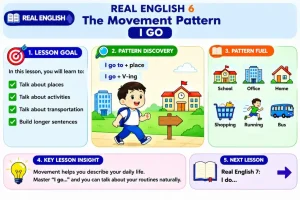
1. What You’ll Learn
ຫຼັງຈາກຮຽນຈົບບົດນີ້ ເຈົ້າຈະສາມາດ:
✅ talk about where you go every day (ບອກໄດ້ວ່າເຈົ້າໄປໃສໃນແຕ່ລະມື້)
✅ describe places, activities, and transportation (ອະທິບາຍສະຖານທີ່, ກິດຈະກຳ ແລະ ວິທີການເດີນທາງ)
✅ build longer sentences using I go… (ຂະຫຍາຍປະໂຫຍກ I go… ໃຫ້ຍາວ ແລະ ທຳມະຊາດຂຶ້ນ)
✅ talk naturally about your daily routines (ລົມກ່ຽວກັບກິດຈະວັດປະຈຳວັນໄດ້ຢ່າງເປັນທຳມະຊາດ)
2. Pattern Discovery
Pattern A:
I go to + place (ຂ້ອຍໄປ + ສະຖານທີ່)
ພວກເຮົາໃຊ້ “I go” ເພື່ອເວົ້າກ່ຽວກັບການເຄື່ອນທີ່ໃນຊີວິດປະຈຳວັນ, ບໍ່ວ່າຈະໄປເຮັດວຽກ, ໄປຊື້ເຄື່ອງ ຫຼື ກັບເຮືອນ ຮູບແບບນີ້ຊ່ວຍໃຫ້ເຈົ້າເວົ້າໄດ້ຢ່າງເປັນທຳມະຊາດ.
-
ໄປໃສ (Where)
-
ໄປກັບໃຜ (With whom)
-
ໄປແນວໃດ (How)
-
ໄປເຮັດຫຍັງ (Why/What)
Examples:
-
I go to work. (ຂ້ອຍໄປເຮັດວຽກ)
-
I go to school. (ຂ້ອຍໄປໂຮງຮຽນ)
-
I go home. (ຂ້ອຍເມືອເຮືອນ – ສັງເກດວ່າເຫັນວ່າສຳນວນນີ້ຈະບໍ່ໃຊ້ to )
Pattern B:
I go + V+ing (ຂ້ອຍໄປ + ເຮັດກິດຈະກຳ)
-
I go shopping. (ຂ້ອຍໄປຊື້ເຄື່ອງ)
-
I go swimming. (ຂ້ອຍໄປລອຍນ້ຳ)
-
I go walking. (ຂ້ອຍໄປຍ່າງຫຼີ້ນ)
📌 Notice:
Do not memorize the sentences. Notice the pattern: I go to + place / doing activity (ບໍ່ຕ້ອງທ່ອງຈຳປະໂຫຍກ, ແຕ່ໃຫ້ສັງເກດຮູບແບບປະໂຫຍກຂອງມັນ).
3. Pattern Fuel
ໃຊ້ຄຳສັບເຫຼົ່ານີ້ປະກອບເຂົ້າກັບ Pattern ຂ້າງເທິງ.
1) Places (ສະຖານທີ່ – ໃຊ້ກັບ I go to…)
-
restaurant (ເຣັດສ-ໂຕ-ຣັນ-) = ຮ້ານອາຫານ
-
market (ມາ-ກິດ) = ຕະຫຼາດ
-
office (ອອຟ-ຟິດສ໌) = ຫ້ອງການ
-
bank (ແບັງຄ໌) = ທະນາຄານ
-
gym (ຈິມ) = ຟິດເນສ/ບ່ອນອອກກຳລັງກາຍ
2) Activities (ກິດຈະກຳ – ໃຊ້ກັບ I go…)
-
running (ຣັນ-ນິງ) = ແລ່ນ
-
traveling (ທຣາ-ໂວ-ລິງ) = ທ່ອງທ່ຽວ
-
camping (ແຄມ-ປິງ) = ຕັ້ງແຄ້ມ
-
hiking (ໄຮ-ກິງ) = ຍ່າງປ່າ
3) Transportation (ພາຫະນະ/ການເດີນທາງ – ໃຊ້ກັບ I go…)
-
by car (ບາຍ ຄາ) = ດ້ວຍລົດ (ລົດໃຫຍ່)
-
by bus (ບາຍ ບັດສ໌) = ດ້ວຍລົດເມ
-
by bike (ບາຍ ໄບຄ໌) = ດ້ວຍລົດຖີບ
-
by train (ບາຍ ເທຣນ) = ດ້ວຍລົດໄຟ
-
on foot (ອອນ ຟຸດ) = ຍ່າງໄປ
4. Pattern Build
✍️ Step 1: Use words from the Word Bank (ຕື່ມຄຳສັບໃສ່ຊ່ອງຫວ່າງ).
-
I go to __________________. (ສະຖານທີ່)
-
I go to __________________.
-
I go to __________________.
-
I go __________________. (ກິດຈະກຳ)
-
I go __________________.
-
I go by __________________. (ພາຫະນະ)
✍️ Step 2: Write five true sentences about yourself
(ຂຽນ 5 ປະໂຫຍກທີ່ເປັນຄວາມຈິງກ່ຽວກັບຕົວເຈົ້າເອງ).
-
I go __________________________________.
-
I go __________________________________.
-
I go __________________________________.
-
I go __________________________________.
-
I go __________________________________.
5. Pattern Expansion
I go to work. (ຂ້ອຍໄປເຮັດວຽກ)
↓
I go to work every day. (…ທຸກໆມື້)
↓
I go to work every day by car. (…ດ້ວຍລົດ)
↓
I go to work every day by car because my office is far from home. (…ຍ້ອນວ່າຫ້ອງການຂ້ອຍຢູ່ໄກຈາກເຮືອນ)
📌 Notice what happened:
The pattern stayed the same. The idea became bigger. (ຮູບແບບປະໂຫຍກຍັງຄືເກົ່າ ມີແຕ່ແນວຄິດທີ່ຂະຫຍາຍໃຫຍ່ຂຶ້ນ).
Now you try:
I go to school.
↓
I go to school _____________________________.
↓
I go to school _____________________________.
↓
I go to school _____________________________.
> Pattern Evolution
The pattern changes with time, but the core idea stays the same.
(ຮູບແບບປ່ຽນຕາມເວລາ ແຕ່ແນວຄິດຫຼັກຍັງຄືເກົ່າ)
Today
I go to work. (ຂ້ອຍໄປເຮັດວຽກ)
Yesterday
I went to work. (ຂ້ອຍໄປເຮັດວຽກມື້ວານ)
Tomorrow
I will go to work. (ຂ້ອຍຈະໄປເຮັດວຽກມື້ອື່ນ)
⚠️ Notice:
Do not worry about grammar yet. Just notice how the pattern changes with time. (ຢ່າຟ້າວກັງວົນກັບໄວຍາກອນ, ພຽງແຕ່ສັງເກດເບິ່ງວ່າຮູບແບບປະໂຫຍກມັນປ່ຽນໄປຕາມເວລາແນວໃດກໍພໍ).
> Pattern Family
Main Pattern:
I go to work. (ຂ້ອຍໄປເຮັດວຽກ)
Related Patterns (ປະໂຫຍກທີ່ກ່ຽວຂ້ອງ):
-
I come to work. (ຂ້ອຍມາເຮັດວຽກ)
-
I leave for work. (ຂ້ອຍອອກໄປເຮັດວຽກ)
-
I travel to work. (ຂ້ອຍເດີນທາງໄປເຮັດວຽກ)
-
I head to work. (ຂ້ອຍມຸ່ງໜ້າໄປເຮັດວຽກ)
📌 Native speakers often switch between these patterns. (ເຈົ້າຂອງພາສາມັກຈະໃຊ້ປະໂຫຍກເຫຼົ່ານີ້ສະຫຼັບກັນໄປມາ).
6. Natural English
In fast speech (ໃນການເວົ້າໄວໆ)
ຄຳວ່າ go to ມັກຈະອອກສຽງເປັນ goh-duh (ໂກ-ເດິ).
Examples:
-
I go to work. ≈ I go-duh work.
-
I go to school. ≈ I go-duh school.
7. Real Conversation
Situation 1: Daily Routine
-
A: Where do you go every day? (ເຈົ້າໄປໃສທຸກມື້?)
-
B: I go to work. (ຂ້ອຍໄປເຮັດວຽກ)
-
A: How do you go? (ເຈົ້າໄປແນວໃດ?)
-
B: I go by car. (ຂ້ອຍໄປດ້ວຍລົດ)
Situation 2: Weekend Plans
-
A: What do you do on weekends? (ເຈົ້າເຮັດຫຍັງທ້າຍອາທິດ?)
-
B: I go hiking. (ຂ້ອຍໄປຍ່າງປ່າ)
-
A: Who do you go with? (ເຈົ້າໄປກັບໃຜ?)
-
B: I go with my friends. (ຂ້ອຍໄປກັບໝູ່)
(Read both conversations aloud three times. – ອ່ານທັງສອງບົດສົນທະນາອອກສຽງດັງໆ 3 ຮອບ).
8. Speaking Challenge
Speak for 30 seconds. Start with:
I go…
Talk about (ລົມກ່ຽວກັບ):
-
where you go (ເຈົ້າໄປໃສ)
-
how you go (ເຈົ້າໄປແນວໃດ)
-
who you go with (ເຈົ້າໄປກັບໃຜ)
-
when you go (ເຈົ້າໄປຕອນໃດ)
-
why you go (ເຈົ້າໄປເຮັດຫຍັງ/ເປັນຫຍັງຈຶ່ງໄປ)
❌ Do not write. (ຫ້າມຂຽນ) ❌ Do not translate. (ຫ້າມແປຕາມຕົວ) ✅ Just speak. (ພຽງແຕ່ເວົ້າອອກມາເລີຍ)
9. Key Lesson Insight
English is not only about who you are or what you have. It is also about movement. Once you master “I go,” you can talk naturally about your daily routines, travel, work, and many everyday activities.
(ພາສາອັງກິດບໍ່ແມ່ນມີພຽງແຕ່ການບອກວ່າເຈົ້າແມ່ນໃຜ ຫຼື ມີຫຍັງ. ມັນຍັງເປັນພາສາຂອງການເຄື່ອນໄຫວ. ເມື່ອເຈົ້າໃຊ້ “I go” ໄດ້ ເຈົ້າກໍສາມາດລົມກ່ຽວກັບຊີວິດປະຈຳວັນ, ການເດີນທາງ, ວຽກງານ ແລະ ກິດຈະກຳຕ່າງໆໄດ້ຢ່າງເປັນທຳມະຊາດ.)
Next Lesson:
> Real English 7: The Action Pattern Behind Thousands of Sentences (I DO)
< Real English 5: The Pattern You Use Every Day Without Realizing It (I LIKE)