1. Who controls the global econony?
When people talk about the global economy, they usually think of powerful countries like the United States or China.
Some believe big corporations like Apple, Nvidia, or TSMC control everything.
Others think the market moves by itself through supply and demand.
But this explanation is incomplete.
Because the real question is not who is powerful — but:
What structure makes power possible in the first place?
2. Core idea
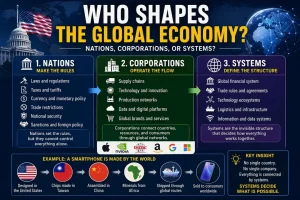
The global economy is not controlled by one actor.
It is shaped by three layers:
Nations, Corporations, and Systems.
But the most important layer is not visible:
Systems define how everything works.
3. Layer 1 — Nations (Ruler makers)
Countries are still important because they set rules.
They control:
- laws and regulations
- taxes and tariffs
- currency policy
- trade restrictions
- sanctions
For example:
- The United States can restrict chip exports
- China can limit rare earth exports
- Governments can block foreign investments
📘 Key Takeaway:
Nations make rules, but they do not control the full system.
4. Layer 2 — Corporations (Operations)
Modern corporations do not only sell products.
They operate global networks.
Examples:
- Apple, Google, Amazon
- Nvidia, TSMC
- logistics and energy companies
They control:
- supply chains
- production networks
- technology access
- data systems
📘 Key Takeaway:
Corporations run the global economy in practice.
5. Layer 3 — Systems (Structure of Power)
This is the deepest layer.
Systems include:
- global financial system (USD system)
- international trade system
- technology ecosystems (AI, chips)
- logistics networks (shipping, ports)
- information networks (internet, data flow)
📘 Key Takeaway:
Systems define what is possible and what is not.
6. Real world case — Semiconductor Industry
The chip industry shows all three layers clearly.
Nations:
- US restricts advanced chip exports
- China invests in domestic chips
Corporations:
- TSMC manufactures advanced chips
- Nvidia designs AI chips
- ASML produces key equipment
Systems:
- global supply chain depends on Taiwan
- AI development depends on US technology
- production depends on multi-country integration
Conclusion:
No single country or company controls the industry.
7. Why this matters for Laos?
This system also affects countries like Laos.
1) Trade dependency
Laos imports fuel, electronics, machinery from global supply chains.
2) Currency system
Most international trade uses USD, affecting prices and inflation.
3) Infrastructure and investment
Energy, mining, and transport depend on foreign capital and systems.
4) Technology access
Advanced technology is controlled by global networks, not local systems.
📘 The Bottom Line:
Laos is inside the global system, not outside it.
8. Analytical shift
Most people think:
- countries control everything
- companies dominate everything
But the real structure is different:
- power is distributed
- control is network-based
- dependency is built into systems
📘 Key insight:
The global economy is not a hierarchy. It is a network.
9. Final insight
The global economy is shaped by:
- Nations (rules)
- Corporations (execution)
- Systems (structure)
But the deepest truth is:
Systems decide what is possible. Everything else operates inside them.
10. Key vocabulary
- system = ລະບົບ
- supply chain = ໂຄງສ້າງການຜະລິດ
- sanctions = ມາດຕະການລົງໂທດ
- corporation = ບໍລິສັດ
- infrastructure = ໂຄງສ້າງພື້ນຖານ
Further reading:
ໝາຍເຫດ: ບົດຄວາມນີ້ເປັນການສອນພາສາອັງກິດ ແລະ ການວິເຄາະຂ່າວລະດັບໂລກ, ບໍ່ແມ່ນຄຳແນະນຳການລົງທຶນ ຫຼື ການເງິນ (Not Financial Advice)!
 Lao Guru Share ຖ້າບົດຄວາມນີ້ມີປະໂຫຍດ, ຢ່າລືມ ກົດແຊຣ໌ (Share) ບົດຄວາມນີ້ອອກໄປ ເພື່ອແບ່ງປັນຄວາມຮູ້ດີໆ ໃຫ້ກັບໝູ່ເພື່ອນ ແລະ ເປັນກຳລັງໃຈໃຫ້ກັບທີມງານ Lao Guru ເດີ້!